Holiday Cooking Essentials: Must-Have Tools for Festive Feasts
Holiday Cooking Essentials: Must-Have Tools for Festive Feasts
Holiday cooking amplifies everything about regular cooking—more dishes, more guests, more complexity, and significantly more pressure to deliver memorable meals. Success depends less on culinary talent than on having the right equipment to handle increased volume and complexity efficiently. The tools that work fine for Tuesday dinner often fail under holiday demands, leading to stress, delays, and compromised results. This guide identifies the essential equipment that transforms holiday cooking from overwhelming chaos into manageable, even enjoyable, celebration preparation.
Why Holiday Cooking Demands Different Equipment
Holiday meals differ from everyday cooking in scale, timing, and expectations. You're preparing multiple dishes simultaneously, often in larger quantities than usual, while coordinating everything to finish at the same time. Guests expect special presentations and memorable flavors. The kitchen becomes a production environment rather than a casual cooking space.
Standard equipment struggles under these conditions. Your everyday roasting pan might not accommodate a 20-pound turkey. Your usual mixing bowls might be too small for doubled recipes. Your serving pieces might lack the capacity or visual appeal that holiday tables demand. Investing in proper holiday equipment isn't about luxury—it's about capability and reducing stress during already demanding occasions.
The Foundation: Large-Capacity Cookware
Holiday cooking requires cookware that handles volume without compromising performance. These pieces form the foundation of successful holiday meal preparation.
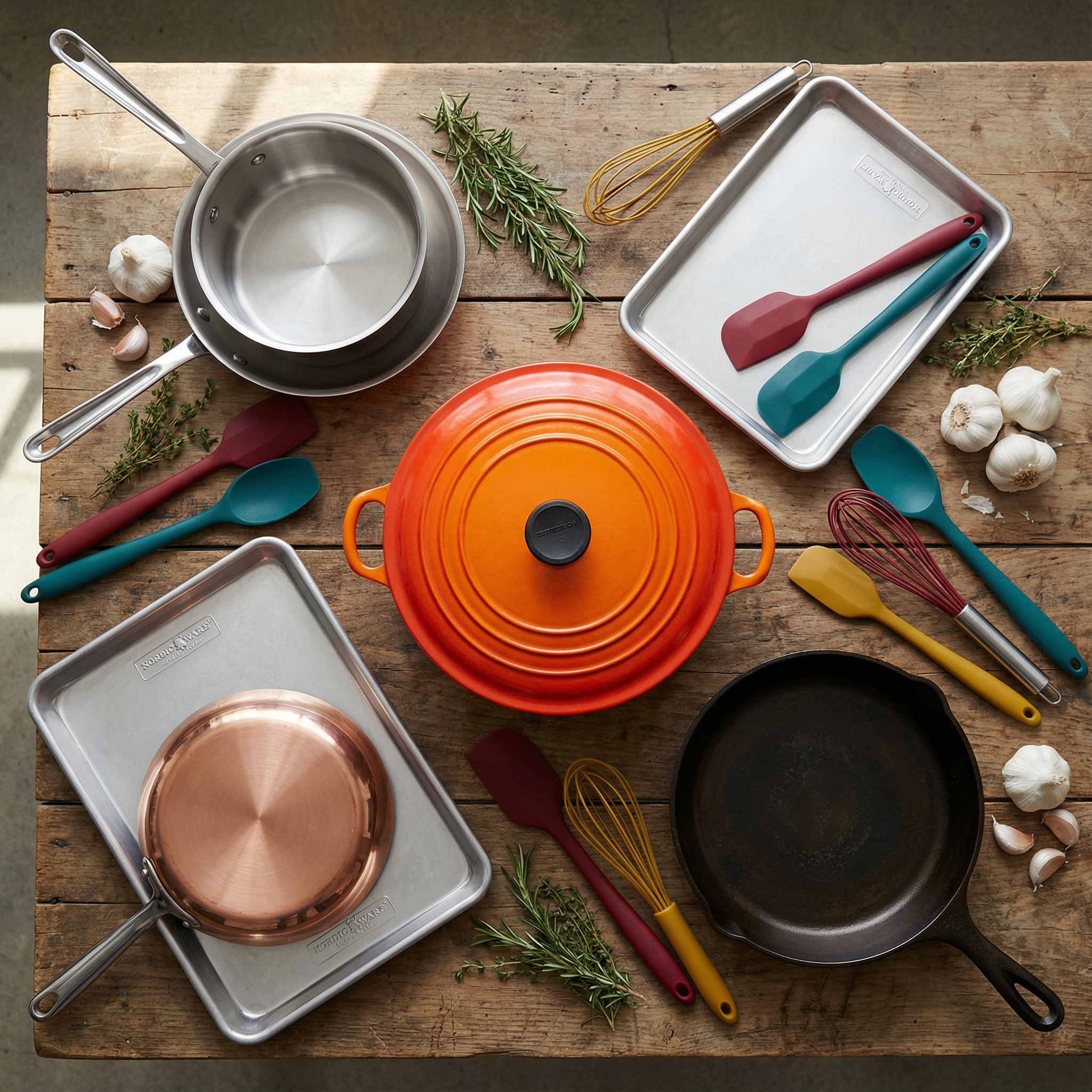
Dutch Oven (6-7 Quart): A quality Dutch oven like Le Creuset handles everything from braising meats to making large batches of soup or stew. The heavy construction maintains even heat distribution even when filled to capacity. The oven-to-table presentation saves serving dishes and keeps food hot longer. During holidays, Dutch ovens excel at make-ahead dishes that free up oven space and attention on the main cooking day.
Look for enameled cast iron rather than bare cast iron for holiday use. The enamel finish requires less maintenance and handles acidic ingredients like wine-braised dishes without affecting flavor. The 6-7 quart size accommodates holiday portions without becoming unwieldy. Smaller sizes limit usefulness; larger ones become too heavy when full.
Large Roasting Pan with Rack: Holiday centerpieces—turkey, prime rib, whole ham—require proper roasting pans that promote even cooking and easy handling. Quality roasting pans feature heavy-gauge construction that won't warp under high heat, handles that remain cool enough to grip safely, and racks that elevate meat for air circulation.
The ideal size depends on your typical guest count. A 16-inch pan handles turkeys up to 20 pounds or equivalent roasts. Smaller pans limit your options; larger ones waste oven space and make handling difficult. The rack is non-negotiable—it prevents meat from steaming in its own juices and promotes the crispy skin everyone expects.
Large Stockpot (12+ Quarts): Holiday cooking generates opportunities for stocks, large-batch soups, and cooking for crowds. A 12-16 quart stockpot handles these tasks without overflow or awkward transfers between smaller pots. The capacity also serves non-cooking purposes—brining turkeys, chilling beverages, or storing prepared ingredients.
Stainless steel construction works best for stockpots. It's durable, non-reactive with acidic ingredients, and dishwasher-safe. The size makes hand-washing impractical, so dishwasher compatibility matters. Look for thick, encapsulated bottoms that prevent scorching when reducing stocks or cooking large quantities.
Baking and Dessert Essentials
Holiday desserts often involve multiple components, precise timing, and impressive presentations. The right baking equipment ensures consistent results even when preparing several desserts simultaneously.
Multiple Sheet Pans: Holiday baking demands more sheet pans than you think. Cookies, roasted vegetables, warming rolls, and countless other tasks all require sheet pans, often simultaneously. Professional kitchens use half-sheet pans (13x18 inches) as their standard—they fit most home ovens while providing maximum capacity.
Invest in at least four quality half-sheet pans. Heavy-gauge aluminum distributes heat evenly and resists warping. Avoid non-stick coatings—they limit maximum temperature and wear out over time. Instead, use parchment paper or silicone mats for easy release. The versatility of sheet pans extends beyond baking into roasting, organizing prep work, and even serving.
Stand Mixer: Holiday baking volume overwhelms hand mixing. A stand mixer handles everything from whipping cream to kneading bread dough without tiring your arms or consuming your attention. The KitchenAid Artisan represents the standard for home bakers—powerful enough for serious work, compact enough for home kitchens, and reliable enough to last decades.
The value extends beyond mixing. Attachments transform stand mixers into pasta makers, meat grinders, and vegetable spiralizers. During holidays, the ability to set the mixer running and attend to other tasks simultaneously multiplies your effective cooking capacity. This equipment investment pays dividends every time you bake.
Pie Dishes and Cake Pans: Holiday desserts often mean pies and cakes, sometimes multiple versions to accommodate different preferences. Glass or ceramic pie dishes promote even browning and allow visual monitoring of bottom crust doneness. Metal cake pans heat faster and release more easily but don't present as attractively.
Own at least two 9-inch pie dishes and two 9-inch round cake pans. This enables simultaneous baking and provides backup if one dessert fails. The modest investment prevents last-minute panic when you realize you can't bake both pies at once.
Prep and Organization Tools
Efficient holiday cooking depends on organization and preparation. These tools streamline the chaos of preparing multiple dishes simultaneously.
Large Cutting Board: Holiday prep involves substantial vegetable chopping, meat trimming, and ingredient organization. A large cutting board (at least 18x24 inches) provides workspace that doesn't require constant clearing. Wood or quality plastic both work well—choose based on maintenance preferences.
Consider owning multiple boards to prevent cross-contamination between raw proteins and other ingredients. Color-coding helps maintain food safety even when multiple cooks share the kitchen. The investment in proper cutting boards improves efficiency and safety during high-pressure cooking sessions.
Prep Bowls and Containers: Professional cooks use "mise en place"—everything in its place—to organize ingredients before cooking begins. This approach becomes essential during holiday cooking when you're managing multiple recipes simultaneously. A set of various-sized prep bowls and containers holds measured ingredients, prepped vegetables, and components ready for assembly.
Glass bowls work well because they're microwave-safe for last-minute warming and dishwasher-safe for easy cleanup. Nesting sets save storage space. The organization these simple tools provide reduces stress and prevents mistakes when you're cooking under pressure.
Kitchen Timer (Multiple): Managing several dishes with different cooking times requires multiple timers. Relying on your phone or oven timer limits you to tracking one or two items. Dedicated kitchen timers cost little but prevent the disasters that result from forgetting about something in the oven.
Digital timers with loud alarms and magnetic backs work best. The magnets keep them visible on the oven or refrigerator where you'll notice them. The loud alarms cut through kitchen noise and conversation. Own at least three timers for serious holiday cooking.
Serving and Presentation Pieces
Holiday meals deserve presentations that match the effort invested in preparation. Quality serving pieces enhance the dining experience while solving practical problems of keeping food hot and portions appropriate.
Large Serving Platters: Holiday main dishes—whole turkeys, prime ribs, glazed hams—require substantial serving platters that accommodate size while presenting attractively. Look for platters at least 18 inches long with slight rims to contain juices. White or neutral colors work with any table setting and make food look appealing.
Oven-safe platters offer additional utility—you can warm them before service to keep food hot longer. The visual impact of a properly presented main dish on an appropriate platter sets the tone for the entire meal. This isn't frivolous decoration; it's functional presentation that affects the dining experience.
Serving Utensils: Proper serving utensils make portioning easier and more attractive. Large serving spoons, slotted spoons, serving forks, and pie servers each serve specific purposes. Stainless steel utensils last indefinitely and clean easily. The modest investment prevents awkward serving situations and makes guests more comfortable serving themselves.
Gravy Boat and Sauce Servers: Hot gravies and sauces need proper serving vessels that keep them warm and pour cleanly. A quality gravy boat with an underplate catches drips and presents attractively. For multiple sauces, small serving bowls with ladles work well. These pieces seem minor until you're trying to serve gravy from a measuring cup—then they become essential.
Specialty Holiday Tools
Certain tasks appear primarily during holiday cooking. These specialized tools handle those specific challenges efficiently.
Turkey Baster: Basting keeps poultry moist and builds flavorful, glossy skin. A quality baster with a heat-resistant bulb and cleaning brush makes this task easy and safe. The alternative—using spoons to ladle pan juices—wastes time and risks burns. This simple tool costs little but significantly improves results.
Meat Thermometer: Holiday roasts represent significant investment and effort. Guessing doneness risks either undercooking (unsafe) or overcooking (dry, disappointing). A quality instant-read thermometer removes guesswork and ensures perfect results every time. Digital thermometers provide readings in seconds, allowing quick checks without releasing oven heat.
Carving Set: Properly carving holiday roasts requires appropriate knives. A carving set includes a long, thin slicing knife and a carving fork that holds meat steady while cutting. The long blade makes smooth, even slices that present attractively. The fork prevents the awkward and dangerous practice of steadying meat with your hand while cutting.
Potato Masher: Mashed potatoes appear at nearly every holiday meal, and quality matters. A sturdy potato masher creates the texture you want—smooth or chunky—without the gluey consistency that results from over-processing. Stainless steel mashers with comfortable handles work best. Avoid ricers unless you specifically want ultra-smooth potatoes; they're slower and harder to clean.
Storage and Leftover Management
Holiday cooking generates substantial leftovers that need proper storage to maintain quality and safety. Planning for leftover management prevents waste and extends the value of your cooking effort.
Quality Food Storage Containers: Invest in a comprehensive set of storage containers in various sizes. Glass containers with secure lids work best—they're microwave-safe, don't absorb odors or stains, and allow you to see contents. The ability to store, reheat, and even serve from the same container simplifies leftover management.
Plan for more storage capacity than you think you'll need. Holiday meals generate surprising quantities of leftovers, and proper storage prevents waste. Containers also help with make-ahead preparation, allowing you to prepare components days in advance and store them safely.
Aluminum Foil and Plastic Wrap: Quality wrapping materials protect food during storage and transport. Heavy-duty aluminum foil handles high temperatures and creates effective seals. Plastic wrap prevents freezer burn and keeps food fresh. These basics seem obvious but using quality versions makes a noticeable difference in food preservation.
Freezer Bags: Many holiday leftovers freeze well, extending their usefulness for weeks or months. Quality freezer bags with secure seals prevent freezer burn and allow you to remove air before sealing. Label bags with contents and dates to prevent mystery packages in your freezer.
Making Smart Equipment Investments
Holiday cooking equipment represents significant investment. These strategies help you build your collection efficiently without overspending.
Prioritize Versatility: Choose equipment that serves multiple purposes. Dutch ovens handle braising, baking, and serving. Sheet pans roast, bake, and organize. Versatile tools justify their cost and storage space more easily than single-purpose gadgets.
Buy Quality Where It Matters: Cookware, knives, and thermometers benefit from quality investment. These items perform better and last longer when you choose reputable brands. Serving pieces and storage containers work adequately at moderate price points. Allocate your budget accordingly.
Build Gradually: You don't need everything immediately. Start with the most essential items for your typical holiday cooking, then add pieces as needs become apparent. This approach prevents buying items you'll rarely use while ensuring you have what you actually need.
Consider Borrowing: Some items—extra-large roasting pans, specialty serving pieces—see limited use. Borrowing from family or friends for occasional needs makes more sense than purchasing items that will sit unused most of the year. Save your investment for frequently used equipment.
Preparing Your Kitchen for Holiday Cooking
Equipment alone doesn't ensure success. Proper preparation and organization multiply the effectiveness of your tools.
Clean and Organize First: Before holiday cooking begins, thoroughly clean and organize your kitchen. Discard expired ingredients, clean out the refrigerator, and organize cabinets so you can find what you need quickly. This preparation prevents mid-cooking searches for equipment or ingredients.
Test Equipment Early: Don't discover equipment problems during holiday cooking. Test your oven temperature with a thermometer, ensure your mixer works properly, and verify that you have all necessary tools. Early discovery of problems allows time for repairs or replacements.
Plan Your Workflow: Map out your cooking timeline, noting when each dish needs attention and which equipment each requires. This planning reveals potential conflicts—like needing the oven for three dishes simultaneously—while there's still time to adjust your menu or timing.
Prepare a Backup Plan: Equipment fails at the worst times. Know where you can borrow critical items if needed. Have backup cooking methods in mind. Keep the phone number for a good bakery or restaurant that might save you if disaster strikes. These contingencies reduce stress even if you never need them.
The Real Value of Proper Equipment
Holiday cooking equipment represents more than just tools—it's an investment in stress reduction, better results, and more enjoyable celebrations. The right equipment transforms holiday cooking from a source of anxiety into an opportunity for creativity and connection.
Quality tools don't guarantee success, but they remove obstacles that prevent success. They handle the mechanical challenges of holiday cooking—the volume, timing, and complexity—so you can focus on the creative and social aspects of celebration. They prevent the equipment-related disasters that turn cooking into crisis management.
Perhaps most importantly, proper equipment makes holiday cooking more enjoyable. When you have the right tools for each task, cooking feels manageable rather than overwhelming. This psychological shift affects not just your stress level but the entire atmosphere of your holiday celebration. Relaxed, confident cooks create better food and better memories than stressed, struggling ones.
Building Your Holiday Kitchen
Start with the foundational pieces—quality cookware, adequate baking equipment, and proper serving pieces. Add specialized tools as specific needs become apparent. Maintain and care for your equipment so it remains reliable year after year. Most importantly, use your equipment. Familiarity with your tools builds confidence and competence that no amount of reading can provide.
Holiday cooking challenges even experienced cooks, but proper equipment transforms those challenges from overwhelming obstacles into manageable tasks. The investment in quality tools pays dividends in better food, less stress, and more enjoyable celebrations. Your holiday kitchen should support your ambitions rather than limiting them. With the right equipment, you can confidently tackle any holiday menu and create the memorable meals that become family traditions.