Complete Cookware Buying Guide for Beginners: What You Actually Need
Complete Cookware Buying Guide for Beginners: What You Actually Need
Walking into a kitchen store as a first-time cookware buyer feels overwhelming. Dozens of pot and pan sets promise to be "essential," each claiming superiority through confusing material specifications and feature lists. Sales associates push expensive sets with pieces you'll never use, while online reviews contradict each other about which materials work best. After years of testing cookware and teaching cooking classes, I've learned that building a functional kitchen requires far less than most people think—but choosing the right pieces matters enormously.
This guide cuts through the marketing noise to help you build a practical, affordable cookware collection that actually supports your cooking journey. We'll focus on what beginners genuinely need, which materials suit different cooking styles, and how to avoid the common mistakes that lead to cluttered cabinets full of unused pots and pans.
The Essential Starter Collection
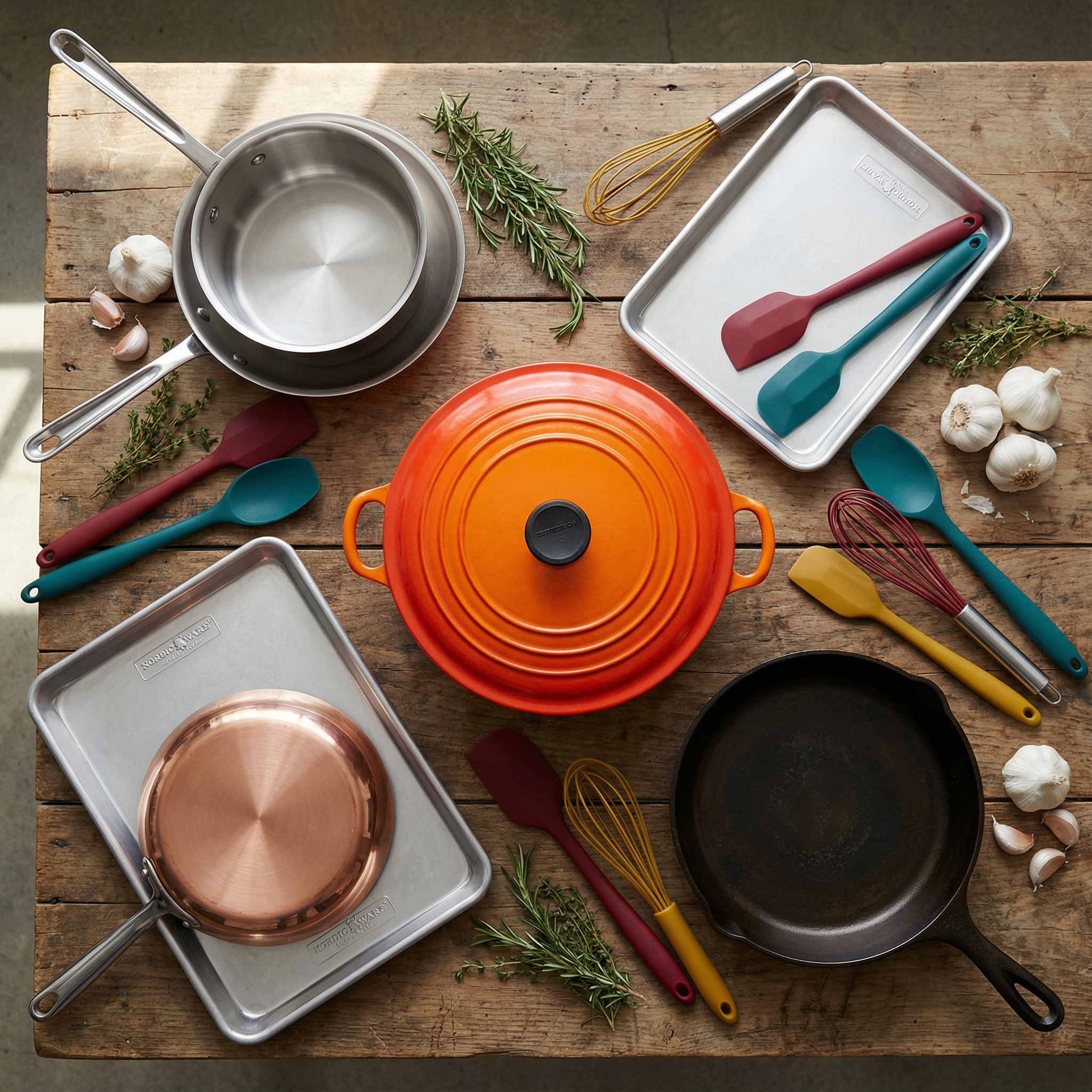
Every functional kitchen needs just five core pieces: a 10-inch skillet, a 3-quart saucepan with lid, a 12-inch skillet, a large pot (8 to 12 quarts) for pasta and soups, and a rimmed baking sheet. This minimal collection handles approximately 90 percent of home cooking tasks, from weeknight dinners to holiday meal preparation. Starting with these basics allows you to learn cooking fundamentals without the distraction and expense of specialized equipment you might never use.
The 10-inch skillet serves as your primary cooking tool, perfect for sautéing vegetables, cooking eggs, searing chicken breasts, and countless other daily tasks. This size accommodates two to three servings comfortably without being so large that small quantities of food burn before cooking through. For most beginners, a non-stick 10-inch skillet provides the most forgiving cooking surface while you develop heat control skills. As your confidence grows, you might add a stainless steel version for tasks requiring higher heat or better browning.
Your 3-quart saucepan handles everything from morning oatmeal to evening pasta sauce. This versatile size boils enough water for side dishes, simmers sauces without excessive evaporation, and reheats leftovers efficiently. The included lid proves essential for tasks like steaming vegetables or keeping liquids from reducing too quickly. Choose a model with a helper handle opposite the main handle—this second grip point makes pouring and lifting much safer when the pan is full.
The 12-inch skillet expands your capacity for larger meals or batch cooking. While the 10-inch handles daily tasks, this bigger sibling accommodates family-sized portions, multiple chicken breasts, or a full pound of ground meat without crowding. Crowding food in too-small pans causes steaming instead of browning, one of the most common beginner cooking mistakes. The 12-inch skillet ensures adequate space for proper heat circulation and food development.
A large pot in the 8 to 12-quart range becomes indispensable for pasta, soups, stocks, and boiling vegetables. The exact size matters less than having something substantially larger than your saucepan. Many beginners try to boil pasta in their 3-quart saucepan, resulting in starchy, sticky noodles from insufficient water. A proper large pot provides the water volume necessary for pasta to cook properly and offers enough capacity for making big batches of soup or chili that freeze well for future meals.
Finally, a rimmed baking sheet (also called a half-sheet pan) extends your cooking capabilities beyond the stovetop. This simple piece of equipment roasts vegetables, bakes cookies, toasts nuts, and even serves as a prep surface for organizing ingredients. The raised rim prevents juices and oils from dripping into your oven, while the flat surface promotes even browning. Professional kitchens use these sheets for virtually everything, and home cooks should follow their example.
Understanding Cookware Materials
Cookware materials represent the most confusing aspect of buying decisions, with each option offering distinct advantages and limitations. Rather than searching for a single "best" material, successful cooks match materials to specific cooking tasks. Understanding how different materials conduct and retain heat helps you choose pieces that support your cooking style rather than fighting against it.
Stainless steel dominates professional kitchens for good reason—it's durable, non-reactive with acidic foods, and capable of withstanding high heat. However, stainless steel alone conducts heat poorly, which is why quality stainless cookware features an aluminum or copper core sandwiched between steel layers. This tri-ply or multi-ply construction combines stainless steel's durability with aluminum's superior heat conductivity. For beginners, stainless steel works best in saucepans and large pots where even heating matters more than non-stick properties. Expect a learning curve with stainless steel skillets, as food tends to stick until you master proper preheating and oil usage.
Non-stick coatings provide the most forgiving cooking surface for beginners, particularly for delicate foods like eggs and fish. Modern non-stick technology has evolved significantly beyond early Teflon concerns, with ceramic and PTFE-based coatings offering reliable performance at reasonable prices. The primary limitation involves heat tolerance—most non-stick pans shouldn't exceed 400°F to 450°F, restricting their use for high-heat searing. Additionally, non-stick coatings eventually wear out, typically lasting three to five years with proper care. This limited lifespan makes non-stick ideal for frequently used pieces like your 10-inch skillet, where the convenience justifies eventual replacement.
Cast iron intimidates many beginners with its reputation for requiring special maintenance, but modern pre-seasoned cast iron needs far less fussing than folklore suggests. Cast iron excels at heat retention, making it perfect for searing steaks, baking cornbread, and achieving crispy-skinned chicken. The material's thermal mass means it heats slowly but maintains temperature exceptionally well, even when you add cold food. For beginners, a 10 or 12-inch cast iron skillet serves as an excellent complement to non-stick options, handling tasks that benefit from high heat and oven-finishing capabilities. The maintenance reality is simple: cook with it regularly, clean with soap and water (yes, soap is fine), dry thoroughly, and apply a thin oil layer before storage.
Hard-anodized aluminum represents a middle ground between non-stick and stainless steel, offering better durability than standard non-stick while remaining more forgiving than bare stainless. The anodization process creates a hard, non-reactive surface that resists scratching and warping. Many hard-anodized pieces include a non-stick coating for added convenience, though the anodized aluminum itself provides some natural release properties. This material works particularly well for sauté pans and saucepans where you want durability without the learning curve of stainless steel.
The Set Versus Individual Pieces Debate
Cookware sets tempt beginners with apparent value—ten pieces for less than buying three individually. However, these sets typically include items you don't need while omitting pieces you do. The economics work in the manufacturer's favor, not yours. They bundle low-cost items like lids (counted as separate pieces) and small saucepans you'll rarely use to inflate the piece count and perceived value.
Building your collection individually costs more initially but results in a more functional kitchen. You can select the best material for each specific use case rather than accepting whatever material the set offers. For example, you might choose a non-stick 10-inch skillet for everyday use, a stainless steel 3-quart saucepan for sauces and grains, and a cast iron 12-inch skillet for high-heat cooking. This mixed-material approach optimizes each piece for its intended purpose rather than compromising across the board.
The exception to the individual-piece recommendation involves quality mid-range sets from reputable manufacturers. If you find a set containing only pieces from the essential starter collection (10-inch skillet, 3-quart saucepan with lid, 12-inch skillet, large pot with lid), and the price per piece beats individual pricing by at least 20 percent, the set might make sense. Verify that the set doesn't include unnecessary items like 1-quart saucepans, steamer inserts, or multiple lids that won't see regular use.
Budget Allocation Strategy
Smart cookware shopping involves strategic budget allocation across your essential pieces. Not every item deserves premium investment, while skimping on certain pieces guarantees frustration. Understanding where to spend and where to save helps you build a functional collection without overspending.
Invest in your primary skillet—the 10-inch pan you'll use almost daily. A quality non-stick skillet in the $40 to $80 range provides significantly better performance and longevity than a $15 budget option. The superior non-stick coating releases food more reliably and withstands more cooking cycles before degrading. This investment pays dividends through years of frustration-free cooking. Brands like T-fal, Calphalon, and Cuisinart offer excellent options in this price range that rival much more expensive alternatives.
Your saucepan deserves similar investment, as this workhorse handles daily tasks from morning coffee to evening sauces. A quality 3-quart saucepan with a heavy bottom and tight-fitting lid costs between $50 and $100 but lasts decades with proper care. The heavy bottom prevents hot spots that burn sauces, while the quality lid creates a proper seal for simmering and steaming. Stainless steel makes the best choice here, as the material's durability and non-reactive properties suit the saucepan's varied uses.
Save money on your large pot, as this piece sees less frequent use and performs a simpler function. A basic stainless steel or aluminum stock pot in the $30 to $50 range works perfectly well for boiling pasta and making soup. The sophisticated heat distribution that matters in skillets and saucepans proves less critical when you're simply bringing large volumes of water to a boil. Spend the minimum necessary to get adequate size and a sturdy construction that won't warp.
The 12-inch skillet occupies a middle ground in budget priority. If you cook for one or two people, this piece sees occasional use and can be a budget option. However, families or those who enjoy entertaining should invest more here, as the larger skillet becomes a primary cooking tool. Consider whether you want non-stick convenience or the versatility of stainless steel or cast iron, then budget accordingly—$30 to $50 for non-stick, $50 to $100 for quality stainless, or $25 to $50 for cast iron.
Common Beginner Mistakes to Avoid
The matching set obsession leads many beginners astray, prioritizing aesthetic coordination over functional performance. Your cookware doesn't need to match—it needs to work. A mismatched collection of pieces chosen for their individual merits outperforms a coordinated set of compromised items every time. Focus on capability rather than appearance, and your cooking results will reflect the priority shift.
Buying too much too soon clutters your kitchen with unused equipment while draining your budget. Resist the urge to purchase specialty items like woks, grill pans, or double boilers until you've mastered the basics and identified a genuine need. Many beginners buy these items based on aspirational cooking plans that never materialize. Start with the essential five pieces, cook with them for several months, then add specialized equipment only when you find yourself repeatedly wishing for a specific tool.
The cheap cookware trap proves expensive in the long run. Ultra-budget cookware (under $15 per piece) typically features thin construction that warps quickly, poor non-stick coatings that fail within months, and handles that loosen or break. These pieces frustrate beginners and often discourage cooking altogether. Spending slightly more on mid-range options ($30 to $80 per piece) provides dramatically better performance and longevity, making the investment worthwhile even on a tight budget.
Ignoring handle comfort seems minor until you're actually cooking. Uncomfortable handles cause hand fatigue, reduce control, and increase the risk of accidents. Before purchasing, if possible, hold the cookware and imagine using it when full and hot. The handle should feel substantial without being heavy, provide a secure grip, and stay cool during stovetop cooking. Many otherwise excellent pans become frustrating to use because the manufacturer skimped on handle design.
Care and Maintenance Fundamentals
Proper care extends cookware lifespan dramatically while maintaining optimal performance. Most maintenance tasks take seconds and prevent problems that would require expensive replacements. Developing good habits from the start ensures your initial investment serves you well for years.
Never heat empty cookware, especially non-stick pans. Always add oil or food before applying heat, as empty pans can reach damaging temperatures within minutes. This practice proves particularly important for non-stick coatings, which can release toxic fumes and permanently degrade when overheated. Even stainless steel and cast iron benefit from this rule, as extreme heat can cause warping or damage to the cooking surface.
Avoid thermal shock by never plunging hot cookware into cold water. The rapid temperature change can warp pans, crack enamel coatings, and damage non-stick surfaces. Instead, allow cookware to cool naturally for several minutes before washing. If you need to clean immediately, use warm water rather than cold to minimize the temperature differential.
Hand wash when possible, even if the manufacturer claims dishwasher safety. Dishwasher detergents are highly abrasive and can damage non-stick coatings, dull stainless steel finishes, and strip seasoning from cast iron. Hand washing with mild dish soap and a soft sponge takes less time than loading a dishwasher and significantly extends cookware lifespan. Reserve the dishwasher for pieces that truly need it, like extremely greasy pans that require multiple wash cycles.
Store cookware properly to prevent scratching and damage. If stacking is necessary, place paper towels, cloth napkins, or commercial pan protectors between pieces. Hanging storage works beautifully for frequently used items, keeping them accessible while preventing contact damage. For cast iron, ensure pieces are completely dry before storage to prevent rust, and maintain a thin oil coating on the cooking surface.
Building Beyond the Basics
Once you've mastered your essential five pieces and identified genuine needs through regular cooking, strategic additions expand your capabilities without cluttering your kitchen. These secondary pieces address specific cooking tasks that your basics handle adequately but not optimally.
A Dutch oven bridges the gap between your saucepan and large pot, offering 5 to 7-quart capacity with heavy construction suitable for braising, baking bread, and slow-cooking stews. The thick walls and tight-fitting lid create an ideal environment for low-and-slow cooking methods. Cast iron Dutch ovens, whether bare or enameled, last generations and perform equally well on the stovetop and in the oven.
A second skillet in a different material provides versatility for multi-component meals. If your primary 10-inch is non-stick, consider adding a stainless steel or cast iron version for tasks requiring high heat or better browning. This pairing allows you to cook proteins in one pan while preparing vegetables in the other, streamlining meal preparation.
Specialty bakeware like loaf pans, muffin tins, and cake pans enters your collection based on your actual baking frequency. If you bake weekly, these items justify their storage space. If you bake twice a year, they don't. Be honest about your cooking patterns rather than buying equipment for an imaginary future version of yourself who bakes constantly.
Making Your First Purchase
Armed with this knowledge, approach your first cookware purchase with confidence. Start with the essential five pieces, prioritizing quality in your primary skillet and saucepan while saving money on your large pot. Choose materials that match your cooking style—non-stick for ease and forgiveness, stainless steel for durability and versatility, or a mix that optimizes each piece for its intended use.
Remember that building a functional kitchen is a journey, not a destination. Your needs will evolve as your cooking skills develop and your food preferences change. The cookware that serves you perfectly as a beginner might feel limiting in a few years, and that's fine. Starting with quality basics ensures you have a solid foundation while leaving room for growth and specialization as your culinary journey progresses.