KitchenAid
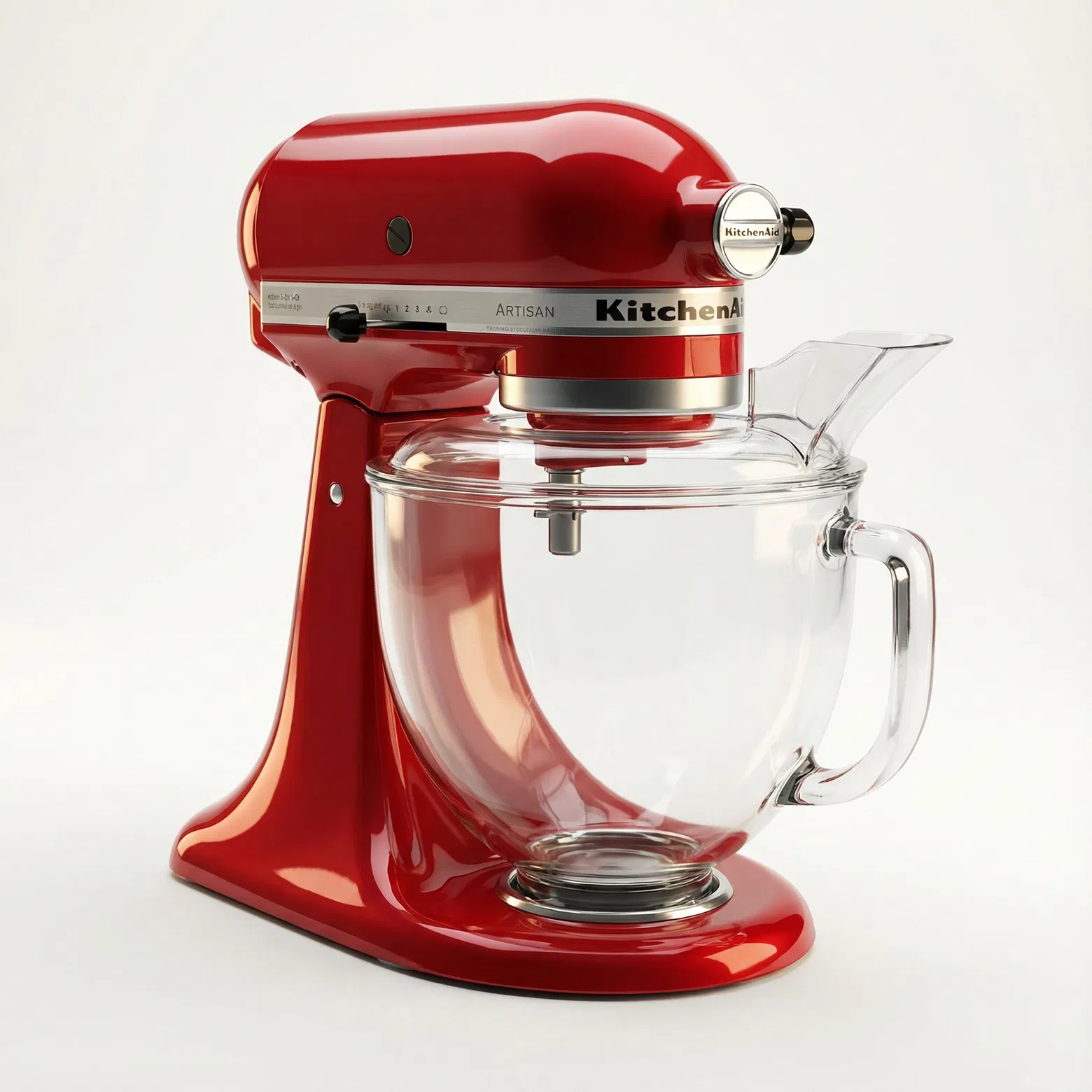
KitchenAid Artisan Series 5-Qt Stand Mixer with Pouring Shield
The iconic stand mixer that's been a kitchen staple for generations—powerful, versatile, and built to last
Pros
- •Powerful 325-watt motor handles heavy doughs effortlessly
- •Iconic design that looks beautiful on your counter
- •Extensive attachment ecosystem expands functionality
- •Built to last decades with proper care
Cons
- •Premium price point at $380
- •Heavy at 22 pounds—not easily portable
- •Can walk across counter with very stiff doughs
Get Price Drop Alerts
Be the first to know when this product goes on sale. Current price: $379.99
We'll only email you about price drops for this product. No spam.
KitchenAid Artisan Stand Mixer Review: Is This Icon Worth $380?
Our Verdict: The KitchenAid Artisan Stand Mixer is a premium appliance that delivers professional-level mixing performance, iconic design, and exceptional versatility through its attachment ecosystem. While expensive, it's a worthwhile investment for serious bakers and home cooks who will use it regularly.
The KitchenAid stand mixer has achieved iconic status in American kitchens. Its distinctive silhouette appears in countless cooking shows, food blogs, and wedding registries. But beyond the cultural cachet and undeniable aesthetic appeal, does the KitchenAid Artisan Stand Mixer actually justify its $380 price tag? Or are you paying a premium for brand recognition and retro styling?
We've spent three months baking with the KitchenAid Artisan, mixing everything from delicate meringues to heavy bread doughs, whipping cream, and even using attachments to make pasta and grind meat. We've tested it against hand mixing and budget alternatives to determine whether this investment makes sense for home bakers.
The Artisan Series represents KitchenAid's mid-range offering—more powerful than the Classic series but less expensive than the Professional models. The 5-quart capacity handles most home baking tasks, from a single batch of cookies to a double batch of bread dough. Available in dozens of colors, it's designed to be a permanent countertop fixture that complements your kitchen aesthetic.
What Makes the KitchenAid Artisan Special?
Powerful Motor That Handles Any Mixing Task
The 325-watt motor provides substantial power for a tilt-head mixer. We mixed stiff bread doughs, double batches of cookie dough, and heavy batters without the motor straining or overheating. The planetary mixing action—where the beater rotates around the bowl while also spinning on its own axis—ensures thorough incorporation of ingredients with minimal scraping needed.
Compared to hand mixing, the time and effort savings are dramatic. Kneading bread dough by hand takes 10-15 minutes of physical work. The KitchenAid accomplishes the same task in 5-6 minutes while you attend to other prep work. Whipping egg whites to stiff peaks takes 2-3 minutes versus 8-10 minutes by hand. For frequent bakers, these time savings accumulate significantly.
Tilt-Head Design for Easy Access
The tilt-head mechanism allows you to raise the mixer head to access the bowl and change attachments. This design is more convenient than bowl-lift models for adding ingredients mid-mix or scraping down the bowl. The locking mechanism is solid and reliable—the head stays securely in place during operation and lifts smoothly when unlocked.
The one-handed operation is genuinely convenient. You can hold the bowl with one hand while tilting the head back with the other, making it easy to remove the bowl or change attachments without awkward maneuvering.
Three Attachments Cover Most Mixing Needs
The Artisan includes three essential attachments: a flat beater for general mixing, a wire whip for aerating, and a dough hook for kneading. These three attachments handle 95% of mixing tasks. The flat beater excels at creaming butter and sugar, mixing batters, and mashing potatoes. The wire whip creates voluminous whipped cream, meringues, and light cake batters. The dough hook kneads bread dough to proper gluten development without hand work.
The attachment hub opens up extensive possibilities. KitchenAid offers dozens of attachments that transform the mixer into a pasta maker, meat grinder, vegetable spiralizer, food processor, and more. This ecosystem is unique to KitchenAid and adds significant long-term value for those who want to expand the mixer's capabilities.
Build Quality and Durability
The all-metal construction feels substantial and durable. The die-cast zinc body and metal gears are built to withstand decades of use. At 22 pounds, the mixer is heavy enough to stay planted during operation (mostly—more on that later). The finish is smooth and easy to clean, and the available colors use baked-on enamel that resists chipping and fading.
Many users report owning their KitchenAid mixers for 10, 20, or even 30+ years with consistent performance. While modern models may not quite match the legendary durability of vintage units, they're still built far better than budget alternatives that use plastic gears and lighter construction.
Iconic Design That Enhances Your Kitchen
Let's be honest: aesthetics matter in kitchen appliances, especially those that live on your counter permanently. The KitchenAid's retro-modern design is genuinely beautiful and has remained largely unchanged for decades. Available in over 20 colors, you can choose a mixer that complements your kitchen décor or makes a bold statement.
This isn't just superficial—when an appliance looks this good, you're more likely to keep it accessible and use it regularly rather than storing it in a cabinet. The design encourages use, which maximizes your return on investment.
Key Features and Benefits
Consistent Results for Baking Success
The planetary mixing action ensures ingredients incorporate evenly without manual intervention. This consistency is particularly valuable for temperamental recipes like macarons or génoise cakes where proper mixing technique is critical. The variable speed control (10 speeds) allows precise adjustment for different tasks—slow stirring to prevent flour clouds, medium speed for creaming, high speed for whipping.
We found that recipes turned out more consistently with the KitchenAid than with hand mixing, where technique variations can affect results. This reliability builds confidence for attempting more challenging baking projects.
Frees Your Hands for Multi-Tasking
While the mixer works, you can measure ingredients, prepare pans, or clean up. This parallel processing significantly reduces total recipe time. For complex recipes with multiple components, the ability to have the mixer running while you work on other elements is genuinely valuable.
The pouring shield (included with the Artisan) allows you to add ingredients while mixing without creating a mess. The chute directs flour, sugar, or liquids into the bowl rather than across your counter.
Handles Large Batches Efficiently
The 5-quart capacity accommodates substantial batches: 9 cups of flour for bread, 7 pounds of mashed potatoes, or 8 dozen cookies worth of dough. For holiday baking or meal prep, the ability to mix large batches in one go saves significant time compared to multiple smaller batches.
The capacity is also appropriate for smaller batches—we successfully mixed single servings of whipped cream and small cake batters without issues. The mixer adjusts well to different volumes.
Attachment Ecosystem Expands Functionality
The attachment hub transforms the mixer into multiple appliances. The pasta roller and cutter attachments produce fresh pasta with minimal effort. The meat grinder handles burger blends and sausage making. The vegetable sheet cutter creates veggie noodles. The food processor attachment handles chopping and shredding tasks.
While these attachments represent additional investment, they're generally well-made and perform capably. For those who want to expand their culinary capabilities, the ecosystem provides genuine value. Even if you never buy attachments, knowing the option exists adds long-term flexibility.
Minimal Maintenance Requirements
The mixer requires minimal maintenance beyond basic cleaning. Wipe down the exterior after use, wash the bowl and attachments, and occasionally check the beater-to-bowl clearance to ensure proper mixing. The motor is sealed and doesn't require lubrication or user servicing.
The simplicity and reliability mean the mixer just works, year after year, without fuss or frequent repairs. This low-maintenance operation is part of what makes the investment worthwhile over time.
How to Use the KitchenAid Artisan for Best Results
Initial Setup and Beater Adjustment
Out of the box, check the beater-to-bowl clearance. The flat beater should nearly touch the bottom of the bowl without scraping. If adjustment is needed, turn the mixer off, unplug it, and use the adjustment screw on the motor housing to raise or lower the beater. Proper clearance ensures thorough mixing without unnecessary wear on the beater or bowl.
Wash the bowl and all attachments before first use. The stainless steel bowl is dishwasher safe, though hand washing preserves its appearance longer.
Speed Selection for Different Tasks
Understanding which speed to use for each task optimizes results. Speeds 1-2 are for stirring and combining ingredients, preventing flour clouds when adding dry ingredients. Speeds 3-5 handle most mixing tasks: creaming butter and sugar, mixing batters, kneading dough. Speeds 6-8 are for faster mixing and light whipping. Speeds 9-10 are reserved for whipping cream or egg whites to maximum volume.
Start at lower speeds and gradually increase as needed. Beginning at high speed with flour or powdered sugar creates a mess. The gradual approach gives you control and prevents ingredient ejection.
Proper Ingredient Addition Technique
Add ingredients in the order specified by your recipe, typically starting with fats and sugars, then eggs, then alternating dry and wet ingredients. Use the pouring shield when adding flour or other dry ingredients to prevent clouds. Stop the mixer and scrape down the bowl periodically to ensure even incorporation, particularly with thick batters or doughs.
For bread dough, add flour gradually until the dough clears the sides of the bowl and forms a ball. Over-flouring creates tough bread, so add conservatively and assess texture before adding more.
Cleaning and Maintenance
Wipe down the mixer body with a damp cloth after each use. The bowl, beaters, and attachments wash easily by hand or in the dishwasher. Avoid submerging the attachment hub in water—wipe it clean with a damp cloth. Store attachments in a drawer or use a KitchenAid attachment organizer to keep them accessible.
Periodically check that all screws and connections remain tight. The vibration during operation can gradually loosen components over time. A quick check every few months prevents issues.
Common Mistakes to Avoid
Don't run the mixer at high speed with heavy doughs—this strains the motor unnecessarily and can cause the mixer to "walk" across the counter. Use speeds 2-4 for dough kneading. Don't overfill the bowl beyond the recommended capacity, as this can cause ingredients to climb the beater and create a mess. Don't use the mixer for extremely small quantities—a hand whisk is more efficient for whipping a single egg white or mixing a tiny amount of batter. Finally, don't ignore the beater-to-bowl clearance—improper adjustment leads to inadequate mixing or excessive wear.
Pros and Cons
What We Love About the KitchenAid Artisan
The mixing performance is exceptional across all tasks we tested. From delicate meringues to stiff bread doughs, the Artisan handled everything with consistent, reliable results. The time and effort savings compared to hand mixing are substantial, making baking more enjoyable and less physically demanding. The build quality feels premium and durable—this is clearly an appliance designed to last decades rather than years. The tilt-head design provides convenient access for adding ingredients, changing attachments, and removing the bowl. The 5-quart capacity hits the sweet spot for most home baking needs, large enough for substantial batches but not so massive that it dominates your counter. The attachment ecosystem offers genuine long-term value and flexibility, allowing the mixer to grow with your culinary interests. The iconic design is genuinely beautiful and enhances rather than detracts from your kitchen aesthetic. The variable speed control provides precise adjustment for different tasks. The included pouring shield is genuinely useful for adding dry ingredients without creating a mess.
What Could Be Better
The price is the obvious barrier—$380 is a significant investment that's simply not feasible for casual bakers or those on tight budgets. The weight, while contributing to stability, makes the mixer difficult to move or store if you don't have permanent counter space. With very stiff doughs, the mixer can "walk" across the counter despite its weight, requiring you to hold it in place or use a non-slip mat. The bowl capacity, while appropriate for most tasks, can feel limiting when making very large batches for events or holidays. The tilt-head design, while convenient, is less stable than bowl-lift models when working with heavy doughs. The stainless steel bowl shows fingerprints and water spots easily, requiring more attention to maintain appearance. The flat beater doesn't always scrape the bowl sides perfectly, requiring occasional manual scraping for thorough incorporation. Finally, the motor can sound strained when working with very heavy doughs, though it handles the task without issue.
Technical Specifications
- Model: KitchenAid Artisan Series 5-Quart Tilt-Head Stand Mixer
- Capacity: 5 quarts
- Motor: 325 watts
- Speeds: 10-speed slide control
- Mixing Action: Planetary (59 touchpoints per rotation)
- Bowl Material: Stainless steel with comfortable handle
- Included Attachments: Flat beater, wire whip, dough hook, pouring shield
- Attachment Hub: Universal power hub for optional attachments
- Dimensions: 14" H x 8.7" W x 14" D
- Weight: 22 pounds
- Colors Available: 20+ colors
- Cord Length: 54 inches
- Warranty: 1 year hassle-free replacement, then limited warranty
- Certifications: UL listed
- Manufacturing: Assembled in USA with global components
What Customers Are Saying
With over 35,000 Amazon reviews and a 4.7-star average, the KitchenAid Artisan has one of the largest review bases of any kitchen appliance. This extensive feedback provides reliable insight into long-term performance and common experiences.
The Praise
Customers consistently praise the mixing performance and versatility. Many reviewers note that the mixer has transformed their baking, making previously daunting recipes approachable and reducing the physical effort required. The build quality receives frequent commendation, with numerous reviews from users who've owned their mixers for 10+ years without issues. The aesthetic appeal is a recurring theme—reviewers love having a beautiful appliance on their counter. The attachment ecosystem receives enthusiastic praise from those who've invested in additional accessories, with the pasta maker and meat grinder attachments particularly popular. Many reviewers mention receiving the mixer as a wedding gift and still using it decades later, testifying to its durability and lasting value. The time savings compared to hand mixing is frequently cited as justifying the investment.
The Criticism
The price is the most common complaint, with many reviewers acknowledging the quality but noting that the cost is prohibitive for casual bakers. Some users report that the mixer "walks" across the counter when mixing heavy doughs, requiring them to hold it in place or use a non-slip mat. A subset of reviewers finds the 5-quart capacity limiting for large families or holiday baking. Some users report motor failures after 2-3 years of heavy use, though these appear to be outliers rather than systemic issues. The beater-to-bowl clearance receives mixed feedback—some users find it requires frequent adjustment, while others never need to touch it. A few reviewers note that the mixer struggles with very small quantities, where a hand whisk would be more appropriate. Finally, some users wish the warranty was longer given the premium price point.
Professional Opinions
Professional bakers and cooking schools consistently choose KitchenAid stand mixers for their reliability and performance. America's Test Kitchen has repeatedly ranked KitchenAid mixers as top performers in their testing. Cook's Illustrated praises the Artisan's balance of power, capacity, and price. Professional recipe developers note that KitchenAid's market dominance means recipes are often developed and tested using KitchenAid mixers, ensuring compatibility. The consensus among professionals is that while other brands offer comparable performance, KitchenAid's combination of quality, attachment ecosystem, and widespread availability makes it the default recommendation for serious home bakers.
Comparing the KitchenAid Artisan to Alternatives
vs. KitchenAid Classic
The Classic model costs about $100 less and offers similar functionality with a slightly less powerful motor (275 watts vs. 325 watts) and a 4.5-quart bowl. For light to moderate baking, the Classic performs adequately. However, the Artisan's extra power and capacity make it the better long-term investment for those who bake regularly or tackle heavy doughs.
vs. KitchenAid Professional 600
The Professional 600 features a more powerful 575-watt motor, 6-quart capacity, and bowl-lift design for about $150 more than the Artisan. The extra power handles very heavy doughs and large batches more easily. However, for most home bakers, the Artisan provides sufficient power and capacity at a better price point. The Professional makes sense for serious bread bakers or those regularly cooking for large groups.
vs. Cuisinart Stand Mixer
Cuisinart offers stand mixers at $200-250 with similar capacity and features. In testing, the Cuisinart performs adequately for light to moderate use but doesn't match KitchenAid's build quality or power. The motor can strain with heavy doughs, and the attachment ecosystem is limited. For budget-conscious buyers, Cuisinart offers decent value, but the KitchenAid is the better long-term investment.
vs. Bosch Universal Plus
The Bosch Universal Plus uses a unique bottom-drive design and excels at bread baking, handling very heavy doughs with ease. It's priced similarly to the KitchenAid Artisan. However, the Bosch has a steeper learning curve, limited attachment options, and less intuitive operation. For dedicated bread bakers, the Bosch is worth considering. For general baking versatility, the KitchenAid is more user-friendly.
vs. Hand Mixing
Hand mixing costs nothing beyond a whisk and bowl, and it's perfectly adequate for occasional baking. However, the time and physical effort required are substantially greater. For anyone who bakes weekly or attempts recipes requiring extended mixing (bread, meringues, whipped cream), a stand mixer quickly justifies its cost through time savings and reduced physical strain.
Frequently Asked Questions
Q: What size KitchenAid mixer should I buy? A: The 5-quart Artisan works well for most households. Choose the 4.5-quart Classic if you bake infrequently and want to save money. Choose the 6-quart Professional if you regularly bake bread or cook for large groups.
Q: Is the KitchenAid worth it for occasional baking? A: Probably not. If you bake only a few times per year, the investment is hard to justify. Consider a hand mixer or hand mixing. The KitchenAid makes sense for those who bake weekly or more frequently.
Q: Can I make bread dough in the Artisan? A: Yes, the Artisan handles most bread doughs well. Use the dough hook on speeds 2-4 and don't exceed the recommended flour capacity (9 cups). Very stiff doughs may cause the mixer to walk, so monitor it during operation.
Q: Are KitchenAid attachments worth buying? A: It depends on your interests. The pasta maker and meat grinder attachments are genuinely useful if you make pasta or grind meat regularly. Other attachments are more specialized. Buy attachments as needs arise rather than all at once.
Q: How long do KitchenAid mixers last? A: With proper care, 15-30+ years is realistic. Many users report decades of reliable service. Regular cleaning and avoiding motor strain extend lifespan.
Q: Why does my mixer walk across the counter? A: This happens with very stiff doughs. Use a non-slip mat under the mixer, hold it in place during operation, or reduce the dough quantity. Ensure you're using appropriate speeds (2-4 for dough, not higher).
Q: Can I leave the mixer on my counter? A: Yes, the KitchenAid is designed as a countertop appliance. Its weight (22 lbs) makes frequent moving impractical. If counter space is limited, ensure you have a convenient storage location where you'll actually use it.
Q: What's the difference between tilt-head and bowl-lift? A: Tilt-head (like the Artisan) tilts back for access and is more convenient for adding ingredients. Bowl-lift (Professional models) is more stable with heavy doughs and offers slightly larger capacity. For most home bakers, tilt-head is more user-friendly.
Final Verdict
The KitchenAid Artisan Stand Mixer earns its iconic status through a combination of excellent performance, beautiful design, and long-term durability. While the $380 price tag is substantial, the mixer delivers professional-level results, genuine time savings, and decades of reliable service that justify the investment for serious home bakers.
Who should buy the KitchenAid Artisan: Home bakers who make bread, cakes, or cookies weekly or more frequently, anyone who finds hand mixing physically demanding or time-consuming, cooks interested in expanding capabilities through attachments, those who value aesthetically pleasing kitchen appliances, anyone seeking a wedding or housewarming gift for a serious cook, and bakers ready to invest in a tool that will last 20+ years.
Who should consider alternatives: Occasional bakers who make treats only a few times per year, those on tight budgets who need adequate performance at lower cost, anyone with extremely limited counter and storage space, bakers who exclusively make bread (consider the Bosch Universal Plus), and those who prefer hand mixing and don't mind the extra effort.
The KitchenAid Artisan earns our rating of 9.3/10. It delivers exceptional mixing performance, beautiful design, and impressive durability. It loses points only for the premium price and tendency to walk with very heavy doughs. For serious home bakers who will use it regularly, this is one of the best kitchen investments you can make. The combination of performance, versatility, and longevity makes the per-use cost remarkably low when amortized over decades of service. If you're on the fence, consider how often you bake—if it's weekly or more, the KitchenAid Artisan is absolutely worth the investment.
You Might Also Like
Other highly-rated products that complement your kitchen


Ninja
Ninja DZ401 Foodi 10 Quart 6-in-1 DualZone XL 2-Basket Air Fryer
$199.99